
Most homeowners can describe what a fireplace looks like. Far fewer could tell you what a flue liner is — or why its condition may be the single most important factor determining whether their chimney is safe to use.
Here's the short version: a damaged or missing flue liner is a direct pathway for fire and carbon monoxide to enter your home. And in San Antonio, where chimneys routinely go months without use between burning seasons, liner deterioration is more common than most homeowners expect.
What Does a Flue Liner Actually Do?
The flue liner is the conduit inside your chimney that channels combustion gases — carbon monoxide, nitrogen dioxide, water vapor, and heat — safely out of your home. It also insulates the surrounding brick and mortar from the intense heat of a fire, protecting combustible framing materials behind the chimney wall.
Without an intact liner, superheated gases can reach temperatures that ignite wall studs and floor joists hidden behind the masonry — often with no visible warning until the fire has already taken hold.
Why San Antonio's Climate is Hard on Flue Liners
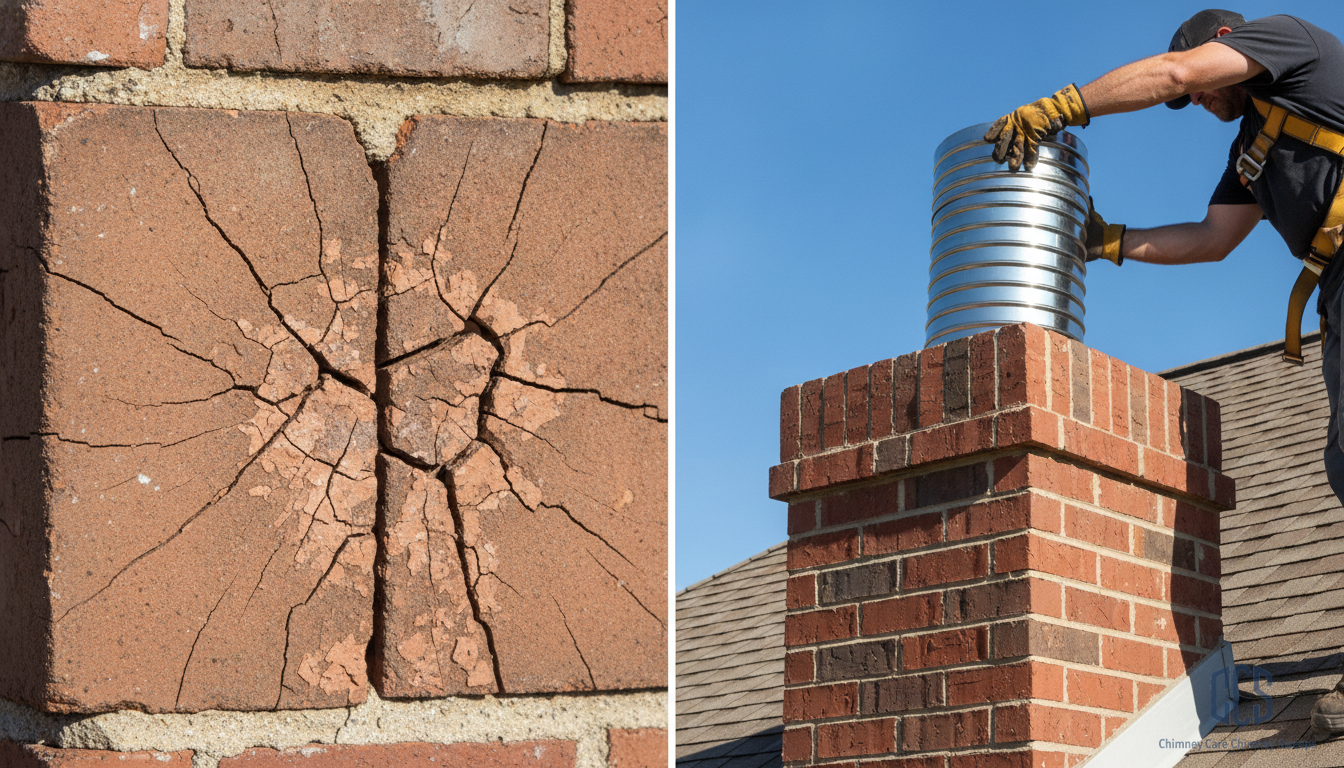
Clay tile is the most common flue liner material in older San Antonio homes, and it has one significant weakness: it expands and contracts with temperature changes. In South Texas, a chimney might sit completely cold for eight months, then experience a rapid thermal shock when a fire is lit in November or December. That repeated cycle — combined with any moisture that has seeped into the flue during the warmer months — causes clay tiles to crack, spall, and eventually crumble.
Homes in established neighborhoods like Alamo Heights and Terrell Hills frequently have original clay tile liners that are decades old and well past their service life, even if the exterior chimney looks perfectly fine.
Warning Signs That Your Liner May Be Damaged
Watch for any of the following between annual inspections:
- White staining (efflorescence) on the exterior brick — a sign that water is moving through the masonry from inside the flue
- Unexplained odors — musty, smoky, or sulfurous smells in the home when the fireplace is not in use
- Smoke entering the room during or after a fire, even when the damper is fully open
- Visible chunks of tile or mortar falling into the firebox
- A past chimney fire — even a small one can crack tiles that looked fine beforehand
None of these symptoms are conclusive on their own, but any one of them warrants a Level 2 chimney inspection with video camera scanning to see exactly what's happening inside the flue.
Your Liner Repair Options
Depending on what the camera inspection reveals, there are two primary paths forward:
Stainless Steel Relining
For liners with widespread cracking, missing sections, or outdated sizing, a flexible stainless steel liner installation is typically the most durable and cost-effective solution. A 316-grade stainless liner is inserted into the existing flue, sized precisely to the connected appliance, and fitted with a top plate, storm collar, and chimney cap. The smooth interior surface resists creosote adhesion and the liner carries a manufacturer warranty against corrosion. This solution works for wood-burning fireplaces, gas inserts, and oil appliances alike.
Targeted Resurfacing
For chimneys with localized tile damage — a few cracked sections in an otherwise sound liner — heat-rated resurfacing compounds like FireGuard can restore liner integrity without a full reline. This option is only appropriate when a thorough camera inspection confirms the damage is truly isolated and the overall structure is solid.
Liner Work We've Done Across the San Antonio Area
Chimney Care Chimney Sweeps performs liner evaluations and installations throughout Bexar County, including the Lackland AFB area, Leon Valley, and Kirby. Every installation is documented with pre- and post-job camera footage so you have a complete visual record of the work performed.
Get a Liner Evaluation Before Burning Season
If your home is more than 20 years old and you've never had a camera inspection of your flue, now is the right time. Call +1 (726) 567-9555 or email [email protected] to schedule your chimney liner evaluation in San Antonio. We're available seven days a week, 8 AM to 6 PM.
Confirm Availability
Call +17265679555 or fill out our online form for a free, no-obligation quote.
Request Free Quote