Chimneys are easy to ignore. They sit up on the roof, out of sight, and unless smoke is pouring into your living room, it's tempting to assume everything is fine. But a chimney that looks fine from the outside can be hiding conditions that pose real fire and structural risks.
Here are five chimney problems that are commonly discovered during inspections across the San Antonio area — and why none of them should be left unaddressed.
1. Cracked or Spalled Firebox Bricks and Mortar Joints
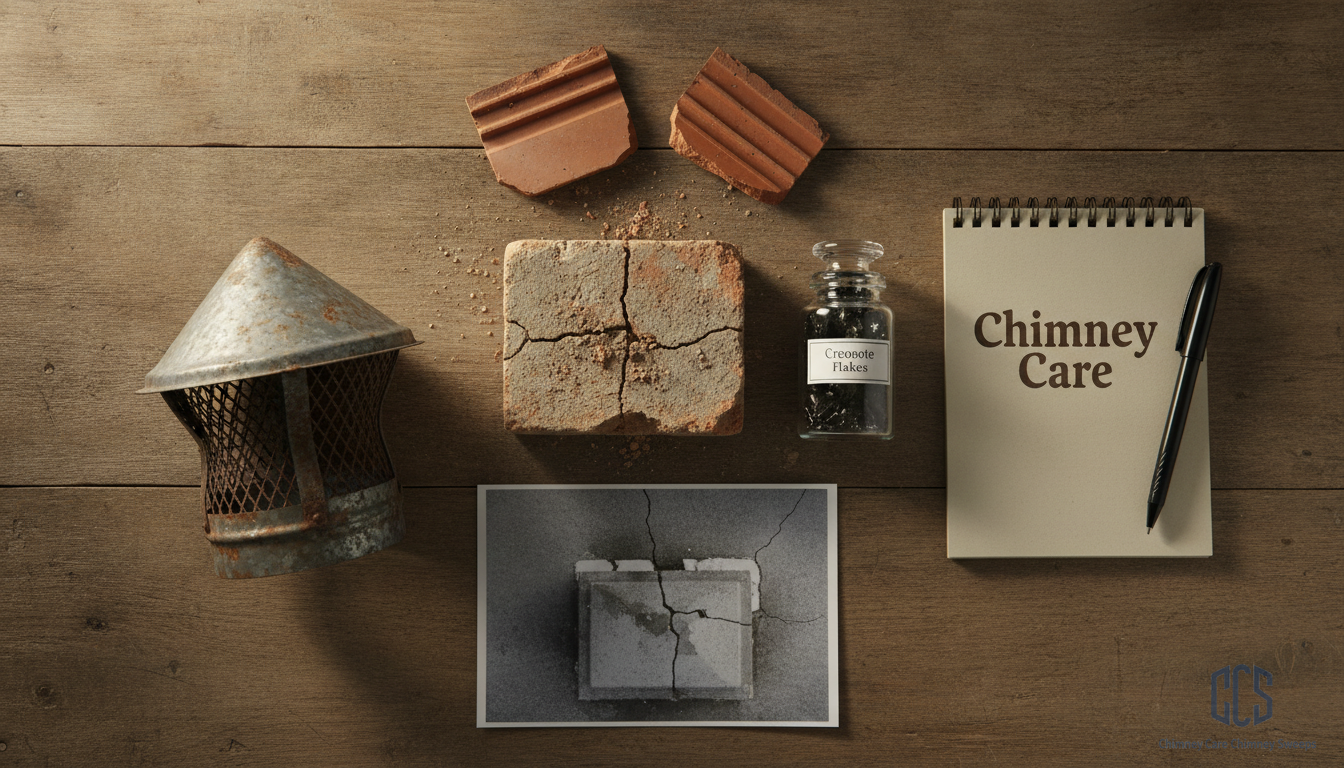
The refractory bricks and mortar lining your firebox interior are designed to contain extreme heat. Over time — especially in fireplaces that go through repeated heating and cooling cycles — mortar joints crack, bricks chip, and gaps develop between the firebox wall and the surrounding framing.
Those gaps are the problem. They allow heat and combustion gases to migrate into wall cavities where insulation, wood framing, and other combustibles are present. A small crack in the back wall of your firebox is not a cosmetic issue — it's a pathway for fire.
Firebox repair and rebuilding using heat-rated refractory mortar and replacement firebricks closes those gaps and restores the combustion chamber to a safe, code-compliant condition. For fireplaces showing early-stage deterioration, targeted repointing of deteriorated joints is often all that's needed. For more advanced cases, a full firebox rebuild brings everything back to NFPA 211 specifications.
Do not use your fireplace if you notice crumbling mortar, spalled bricks, or chunks of masonry falling into the firebox. Schedule an inspection first.
2. A Missing or Broken Chimney Cap
The chimney cap — the metal cover that sits over the flue opening at the top of your chimney — is one of the least expensive components of a chimney system and one of the most important. Without it, every rainstorm drives water directly into the flue. Every spring and summer, birds and squirrels find the open flue and move in.
Nesting material is highly combustible and can completely block the flue, forcing carbon monoxide back into your home. Water in the flue accelerates liner deterioration, rusts the damper, and promotes mold growth inside the smoke chamber.
A properly fitted stainless steel cap, installed as part of a chimney cap and crown repair service, prevents all of these issues at once. Caps are sized to the flue tile or liner diameter and secured against wind displacement. It's among the most cost-effective chimney maintenance investments available.
3. A Cracked Chimney Crown
The chimney crown is the mortar or concrete slab that covers the top of the chimney structure, surrounding the flue tile and sloping outward to direct water away from the brick below. In San Antonio, where summer heat causes significant expansion and contraction of masonry, and where hail and heavy storms are not uncommon, chimney crowns crack regularly — and most homeowners never notice until interior water damage appears.
A cracked crown allows water to penetrate behind the brick, into the flue, and eventually into the home's ceiling and walls. Repairing a cracked crown early — using professional-grade elastomeric coatings that flex with temperature changes — is dramatically less expensive than addressing the water damage and masonry deterioration that follows if it's left alone.
Pair crown repair with chimney waterproofing treatment for complete moisture protection of the entire chimney exterior.
4. Heavy Creosote Buildup
Creosote accumulates in three stages. Stage 1 is a light, dusty deposit that's easily brushed away during a standard chimney sweep and cleaning. Stage 2 is a harder, flakier buildup that requires more aggressive removal. Stage 3 — glazed creosote — is a shiny, tar-like coating that adheres tightly to the liner walls and is extremely difficult to remove.
All three stages are flammable. A chimney fire fueled by heavy creosote can exceed 2,000°F — hot enough to crack clay tile liners, damage brick mortar, and ignite the wood framing surrounding your chimney chase. Chimney fires are often quiet enough that homeowners don't realize one has occurred, only discovering the damage during a subsequent inspection.
Annual sweeping is the only reliable way to prevent significant creosote accumulation. If you haven't had your chimney swept in more than a year, schedule an appointment before your next fire.
5. A Deteriorated Flue Liner
We covered this in depth in our guide to chimney liner damage and warning signs, but it deserves a mention here because it is both the most consequential chimney problem and the most invisible without a camera inspection.
A cracked, missing, or undersized flue liner allows carbon monoxide, heat, and combustion gases to escape through the chimney wall into living spaces and wall cavities. There are often no visible external signs until the damage is advanced. A Level 2 chimney inspection with video camera scanning is the only way to definitively assess liner condition — and it's strongly recommended for any home changing ownership, after a chimney fire, or for any chimney that hasn't been inspected in the past several years.
Where We Serve in the San Antonio Area
Chimney Care Chimney Sweeps addresses all five of these issues — and many more — for homeowners throughout Bexar County. Our service area includes Alamo Heights, Terrell Hills, Leon Valley, the Lackland AFB area, and Kirby, and we're open Monday through Sunday, 8 AM to 6 PM.
If you've noticed any of the warning signs described above — or if it's simply been a year or more since your last inspection — call +1 (726) 567-9555 or email [email protected] to schedule a comprehensive chimney evaluation. Catching problems early is always less expensive than repairing the damage they cause.
Confirm Availability
Call +17265679555 or fill out our online form for a free, no-obligation quote.
Request Free Quote