
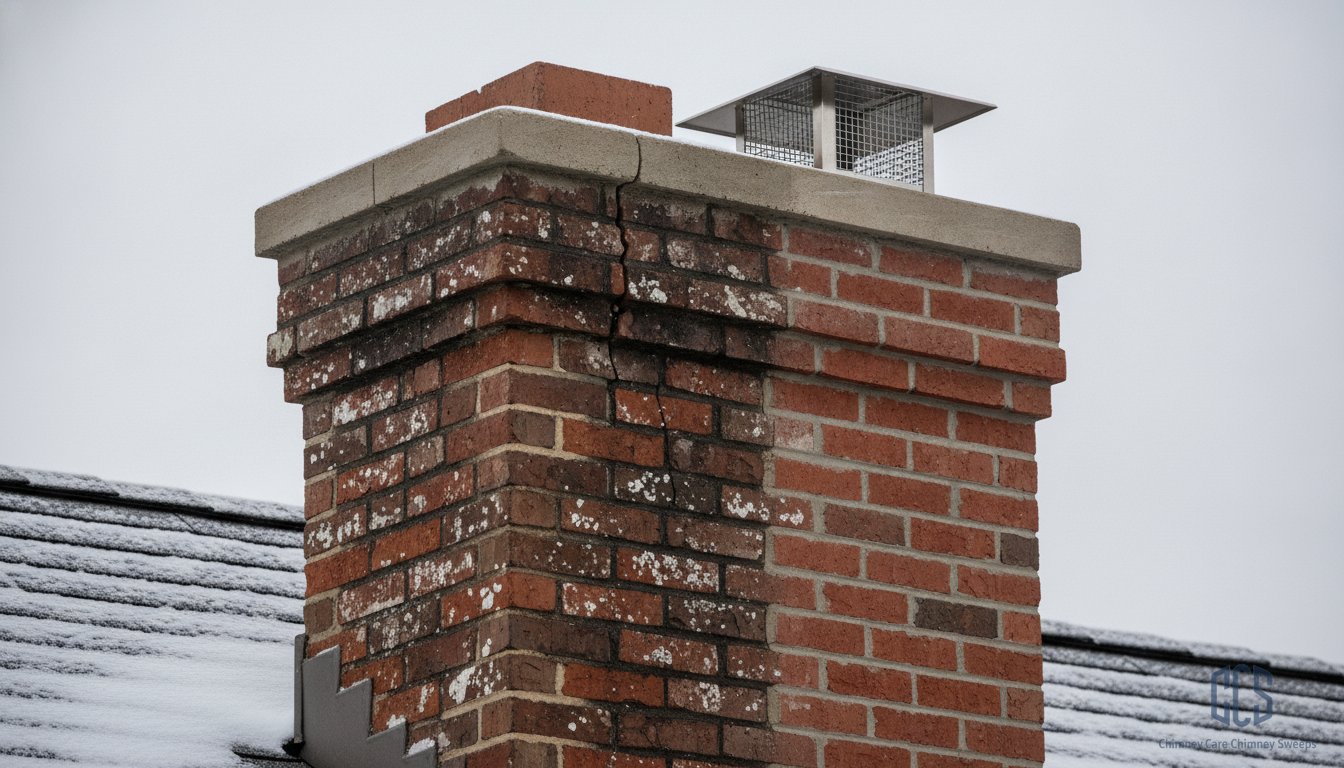
Why Water Is Your Chimney's Biggest Threat in New England
Worcester, MA homeowners deal with some of the most chimney-punishing weather in the country. A typical Worcester winter brings heavy snow, repeated freeze-thaw cycles, nor'easters, and extended periods of wet, icy conditions. Unlike wind or fire damage — which tend to be dramatic and immediately obvious — water damage to a chimney is slow, relentless, and often invisible until it has progressed to an expensive structural problem.
When moisture infiltrates porous brick and mortar and then freezes, it expands with tremendous force — wide enough to crack solid masonry over just a few seasons. This process, called spalling, causes bricks to flake and crumble, mortar joints to erode, and eventually entire sections of the chimney to lose structural integrity. Homeowners in Tatnuck, Burncoat, Greendale, and across Worcester encounter this issue regularly, particularly in homes built before modern waterproofing products were available.
The Four Ways Water Gets Into a Chimney
Understanding the entry points helps you prioritize where to focus your protection strategy:
- Missing or damaged chimney cap: Without a cap, rain and snow fall directly into the flue opening, soaking the liner and firebox every time it rains. Animals entering through an uncapped flue compound the problem by building nests that trap additional moisture.
- Cracked or missing chimney crown: The crown is the concrete slab at the top of the chimney stack. Its job is to shed water away from the flue and protect the top courses of brick. A cracked or improperly sloped crown channels water directly into the masonry rather than away from it.
- Deteriorated mortar joints: Mortar is more porous than brick and weathers faster. As mortar joints crack and erode, they create direct pathways for water to travel deep into the chimney structure.
- Unprotected brick surface: Even intact brick absorbs water. Without a breathable water repellent on the exterior surface, the entire face of the chimney acts as a sponge during rain and snowmelt.
A Complete Moisture-Management Strategy
Effectively waterproofing a chimney is not a single product or a single service — it is a layered system. Here is how Chimney Care Chimney Sweeps — Worcester approaches full moisture protection:
Step 1: Inspect First
No waterproofing treatment is effective if applied over existing structural damage. A Level I or Level II chimney inspection identifies every area of concern before any treatment begins. Our inspectors document the condition of the crown, cap, mortar joints, flue liner, and exterior masonry with photographs and a written report so you know exactly what needs attention.
Step 2: Repair Structural Damage
Once the inspection is complete, any identified damage is addressed through our chimney repair services. This typically includes tuckpointing — grinding out deteriorated mortar joints to the required depth and packing them with fresh, properly mixed mortar — as well as crown repair or rebuilding, firebox brick replacement, and smoke chamber parging as needed. Applying waterproofing over structural damage is a waste of money; water will simply bypass the treatment through cracks and open joints.
Step 3: Install or Replace the Cap and Crown
A properly built chimney crown sloped away from the flue opening and a correctly sized stainless steel chimney cap are the two most impactful physical barriers against water entry. Our cap and crown installation service covers everything from flexible sealant repairs on surface cracks to full concrete crown rebuilds and stainless steel cap replacement for single and multi-flue chimneys. In Worcester's climate, we strongly recommend stainless steel or copper caps over galvanized steel for maximum longevity.
Step 4: Apply Professional Chimney Waterproofing
After all structural repairs are complete and the masonry is clean and dry, our technicians apply a professional-grade, vapor-permeable water repellent to the entire exterior chimney surface. This is a critical distinction: chimney waterproofing products are specifically formulated to be breathable, meaning they block liquid water from penetrating inward while still allowing water vapor produced inside the flue to escape outward through the masonry. Standard paints and sealers do the opposite — they trap moisture inside and accelerate the very damage they claim to prevent.
Our technicians apply the repellent in two overlapping coats for complete, even coverage. The treatment should be reapplied every five to ten years for ongoing protection, making it one of the most cost-effective maintenance investments a Worcester homeowner can make.
Warning Signs Your Chimney Already Has Water Damage
If you notice any of the following, schedule a professional assessment as soon as possible:
- White staining (efflorescence) on the exterior brick — mineral deposits left behind as water evaporates through the masonry
- Flaking, crumbling, or missing brick faces (spalling)
- Cracked or missing sections of the chimney crown
- Water stains on the ceiling or walls near the fireplace
- A musty or damp smell from the fireplace when it is not in use
- Pieces of clay tile or mortar appearing in the firebox
- Rust stains inside the firebox or on the damper
Any of these signs warrants at minimum a Level I inspection and likely a more thorough Level II video scan to assess the full extent of liner and masonry damage.
Serving Worcester and Greater Worcester Communities
Chimney Care Chimney Sweeps — Worcester provides the complete moisture-management service sequence — inspection, repair, cap and crown installation, and waterproofing — to homeowners throughout Worcester, MA and nearby communities including Auburn, Shrewsbury, and Millbury. We are available Monday through Sunday, 8:00 AM to 6:00 PM. Call (774) 238-5550 or email [email protected] to schedule your assessment and protect your chimney before Worcester's next harsh winter arrives.
Confirm Availability
Call +17742385550 or fill out our online form for a free, no-obligation quote.
Request Free Quote